
2025-08-25
Does Weight Affect Electric Scooter Speed?
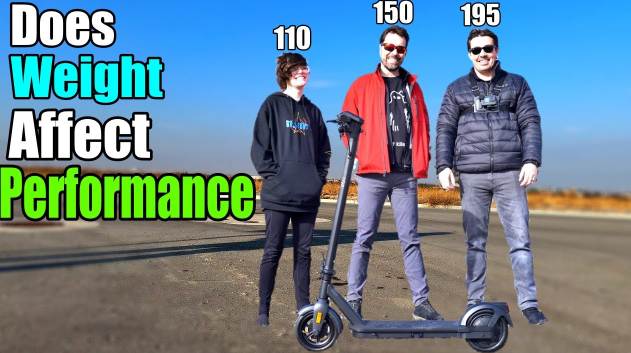
Electric scooters have become one of the fastest-growing transportation options around the world. They are lightweight, convenient, eco-friendly, and perfect for urban commuting. But many riders have the same question when stepping onto their scooter: does weight affect scooter speed?
The short answer is yes. Rider weight, combined with the scooter’s structural limits and motor capacity, has a direct effect on acceleration, maximum speed, battery life, and even long-term durability. However, weight is just one of many factors that determine electric scooter performance.
The short answer is yes. Rider weight, combined with the scooter’s structural limits and motor capacity, has a direct effect on acceleration, maximum speed, battery life, and even long-term durability. However, weight is just one of many factors that determine electric scooter performance.
In this in-depth guide, we will explore the science, physics, engineering, and real-world insights behind how weight influences scooter speed. We will also examine related aspects like hill climbing ability, battery strain, braking efficiency, and safety considerations. By the end, you will have a clear understanding of why rider weight matters and what can be done to maximize performance.
What Determines Electric Scooter Speed?
Before we dive into how weight specifically affects performance, it’s essential to understand the general factors that control an electric scooter’s speed.
Motor Power and Torque
The motor is the heart of every electric scooter. Motors are typically rated in watts (W), ranging from 250W for lightweight commuter scooters to 2000W or more for heavy-duty models. The higher the wattage, the stronger the motor.
-
A 250W motor can achieve speeds of around 20–25 km/h on flat ground but struggles with heavier riders or steep inclines.
-
A 500–1000W motor offers faster acceleration and higher top speeds, making it better suited for heavier riders.
-
High-performance scooters with 2000W+ motors can carry very heavy riders and still maintain speed, even uphill.
Motor torque—the rotational force that drives the wheels—is also critical. Higher torque motors handle extra weight better and sustain speed more effectively.
Battery Capacity and Voltage
The battery determines how much energy the scooter can store and deliver. Capacity is measured in watt-hours (Wh), while voltage affects acceleration and climbing power.
-
Higher voltage batteries deliver more power to the motor, helping scooters maintain speed under heavy loads.
-
When carrying heavier riders, the battery drains faster, which reduces both speed and range.
Controller and Software Limitations
Modern electric scooters use controllers that regulate how much power flows from the battery to the motor. Even if the motor is capable of higher speeds, the controller may limit maximum output for safety reasons.
This is why some scooters cap speeds at 25 km/h regardless of rider weight, while others are programmed to adjust performance dynamically.
How Does Rider Weight Impact Electric Scooter Speed?
Now that we know the general performance factors, let’s examine how rider weight specifically plays a role.
Acceleration and Top Speed
Physics tells us that force = mass × acceleration (F = ma). This means that the heavier the total mass (rider + scooter), the more force the motor needs to produce to accelerate.
-
A light rider (60 kg) may reach maximum speed quickly.
-
A heavy rider (100 kg+) will notice slower acceleration and may not reach the scooter’s advertised top speed.
For example, a scooter rated for 25 km/h may only reach 20–22 km/h under a heavier load.
Climbing Hills and Inclines
Weight has an even stronger effect on inclines. When going uphill, gravity pulls the scooter downward, and the motor must work harder.
-
Light riders can often climb a 15° hill smoothly.
-
Heavy riders may slow down significantly or even stall on the same incline if the scooter lacks sufficient torque.
Battery Efficiency and Range
Extra weight requires more energy to move. This means the scooter’s battery drains faster when carrying heavier riders.
-
Light riders may achieve the full advertised range (e.g., 30 km).
-
Heavier riders may only reach 20–25 km on the same charge.
Battery efficiency is therefore one of the most noticeable impacts of rider weight.
Is There a Weight Limit for Electric Scooters?
Every electric scooter has a manufacturer-recommended weight limit, usually between 100 kg (220 lbs) and 150 kg (330 lbs).